Showing posts with label world politics. Show all posts

Friday, September 1, 2017

The disinformation campaign on Venezuela


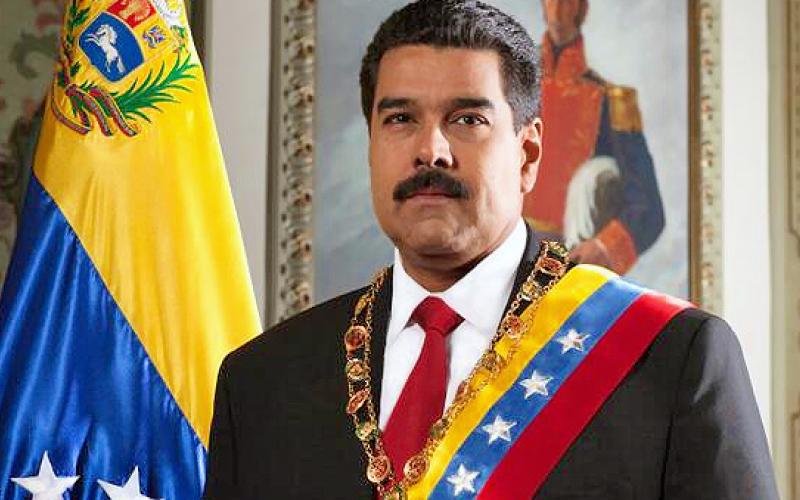
credits: jis.gov.jm
The disturbances created by the wealthy are part of the imperialists’ intervention plan in Venezuela. The disinformation campaign carried out by the mainstream media is a key component of that effort. So, no one should be surprised by the profusion of Orwellian statements and the incessant vilification of President Maduro in mainstream coverage of Venezuela.
Venezuela, it seems, is a riddle to the audiences of the mainstream media. Yet the riddle conceals a fact. A conflict between opposing interests is roaring in the country, and attempts to stoke that conflict are being intensified by the imperialist-interventionist quarter as the day for a vote on the proposed Constituent Assembly—July 30— nears.
Every day the mainstream media showers its viewers with news reports that are partial and biased. Here are some examples from the past several weeks:
  1. A Venezuelan diplomat to the UN has decided to break with the government and resigned. The diplomat called on President Nicolas Maduro to resign immediately.
  2. Recent protests have led to the deaths of more than 100 persons.
  3. Venezuela’s chief prosecutor has confirmed a second death in Thursday’s protests. The chief prosecutor said she was investigating the death.
  4. Maduro has decried the general strike called by the opposition a crude attempt to sabotage the country’s economy.
  5. Maduro has also denounced an opposition attack outside the offices of VTV, Venezuelan state TV.
  6. Opposition protesters and pro-government forces threw rocks at one another while the Venezuelan National Guard launched teargas and rubber bullets.
  7. Streets in opposition-friendly neighborhoods in eastern Caracas were almost entirely devoid of activity during the strike. Some businesses remained open in parts of the capital traditionally loyal to the ruling party but foot and vehicle traffic was significantly reduced.
  8. More than 7 million Venezuelans cast ballots in an opposition-led “consultation” on July 16. Nearly 700,000 of those votes came from Venezuelans abroad.
Other news
Yet there is a significant number of other news stories on Venezuela that the mainstream media chose not to report:
  1. Citing the Proletarian Agency of Information, a grassroots media group, on 20 July 2017 Venezuela Analysis reported: In the industrial city of Barquisimeto, many workers have made efforts to maintain production despite several cases of sabotage by business owners, administrators and protestors. In the case of DISICA, a private company that supplies state oil firm Petróleos de Venezuela, S.A. (PdVSA) with iron construction material, the workers “continue working and have not stopped operations.”
  2. The same news report said: State-owned Lacteos Los Andes, a diary company, has alleged that since early hours of the afternoon, they have been under attack by opposition groups armed with home-made mortars and Molotov cocktails. The groups “tried to set […] fire to an industrial gas tank.”
  3. Workers complained of delays caused by opposition barricades.
  4. Opposition mayors supported the strike.
  5. Working class neighborhoods have largely been unaffected by the strike.
  6. Maduro told VTV: “The 700 largest companies in the country are working at 100 percent of their capacity.”
  7. The government said: Almost all 2.8 million public employees including employees of PdVSA turned up to work. The PdVSA management said it was not affected by the strike. (Ryan Mallett-Outtrim and Katrina Kozarek, “Venezuela Divided Over Opposition’s General Strike,” Venezuela Analysis, July 20, 2017.)
  8. Any change to the constitution by the proposed constituent assembly, once elected, will need to be put to a referendum.
  9. The death of Hector Anuel, a citizen, assaulted by opposition protesters in Anzoategui state. Anuel’s death sparked a social media outrage, after footage went viral that seemed to show his charred corpse being beaten by opposition protesters. According to news outlet La Tabla, Anuel was killed after being hit by a home-made mortar used by opposition protesters. The shot itself was allegedly caught on camera. Anuel was burned, before being pummelled with stones and other debris. In the footage alleged to show his death, Anuel appeared unarmed. (Ryan Mallett-Outtrim, “Venezuela Shocked by Graphic Footage of Alleged Mortar Killing,” Venezuela Analysis, July 19, 2017.)
  10. The Bolivarian government made no attempt to stop the opposition-organized “vote taking” even though it had no legal standing (and, therefore, was no more than a circus). Initially, the show was described as a “referendum” and a “plebiscite”. It had the logistical support of the National Assembly, the regional governors and opposition mayors. The propertied classes and imperialist camp also extended full support to the so-called referendum, which should be seen as part of attempts to organize a parallel government. Five rightist former presidents from Latin American countries were allowed to observe the proceedings. They made fiery speeches demanding Maduro’s exit. All these leaders are entangled in corruption cases, and they have not hesitated to use repressive power against workers and peasants in their respective countries. (Jorge Martin, “Venezuela: July 16 opposition ‘consultation’ countered by a Chavista show of strength,” In Defense of Marxism, July 20, 2017)
  11. The opposition-organized show mobilized a large number of people. However, long queues at “polling stations” in some areas of the capital city were due to a small number of “polling stations.” For example, in Catia, there was one polling station for 90,000 people. Moreover, the opposition leaders have admitted: people could vote more than once. There is already a video showing a person voting three times in one hour in the right-wing stronghold of Chacao. Furthermore, at the end of the day, they burnt the ballots and the registers, which demolishes all scopes to check the opposition announced result. This is the political force, “which has been accusing the Bolivarian revolution of election fraud for the last 15 years!” (ibid.)
  12. There was an official dry run of the proposed Constituent Assembly (CA) elections—a presence of Chavismo’s strength—on the same day the so-called referendum was organized by the opposition. The dry run of the Constituent Assembly vote had a very high turnout, as evidenced by long queues in front of official National Electoral Council polling stations throughout the country. Even in big cities, where opposition support is greatest, long queues were common. Local councils of a number of these cities are controlled by the opposition. In many neighborhoods the queues were so long that the polling stations had to keep open until 8pm (four hours later than the scheduled time). There was even significant voter presence in Petare parish, which supported the opposition in recent elections. In Merida, many people waited in queues for hours and finally had to return home without participating in the dry run. (ibid.)
  13. In a poll by Hinterlaces of over 1,500 Venezuelans the majority said they support a socialist economy, with the caveat that state-run enterprises need to improve their efficiency. The poll asked participants if “the best thing for Venezuela is a socialist economic model of production, where various forms of private property exist.” Three out of four Venezuelans agreed with this statement and only 1 percent was unsure. The results were released in a speech by Oscar Schemel (a pollster with Hinterlaces) to local business leaders in Caracas. Schemel said data shows Venezuelans want a socialist state with private investment and a “mixed economy.”: “61 percent of the population affirms that the economy must be led by the state, 86 percent think that the government should promote private investment, 78 percent consider that the government’s dialogue with businesspeople is more important than with the opposition, and 63 percent distrust the opposition.” While the majority of Venezuelans said they support socialism, 63 percent of the respondents said the government needs to become “more productive and efficient”, 32 percent said the current model should “change”, 74 percent said they would oppose any proposal to privatize PdVSA. When asked whether the electricity grid should be privatized, 67 percent opposed the suggestion while 69 percent opposed suggestion for privatizing state telecommunications giant CANTV. (Ryan Mallett-Outtrim, “POLL: 75% of Venezuelans support socialism, 63% distrust opposition,MR Online, July 23, 2017)
The mainstream media has failed to cover nearly all of these stories; when they have, the message has been distorted to fit the viewpoint of the US ruling class.
Deaths
Since the mainstream media incessantly flaunts its “objectivity” we can reasonably ask: how objective has their reporting been on deaths and killings over the last four months? Is there any mention of opposition-induced violence? Any reasonable assessment would conclude that opposition has played little, if any role, other than to protest; whereas most, if not all, have been murdered by Maduro and his security machine.
So far, the opposition organized unrest has left 105 persons dead (date last updated: July 18). There is confusion over the causes of and parties responsible for these deaths. An in-depth account by Venezuela Analysis (“In detail: The deaths so far”, July 11, 2017) showed the following:
Deaths caused by authorities: 13
Direct victims of opposition political violence: 20
Deaths indirectly linked to opposition barricades: 8
Deaths still unaccounted for/disputed: 44
Accidental deaths: 3
Persons dead during lootings: 14
Deaths attributed to pro-government civilians: 2
The mainstream media not only avoid giving any such breakdown, they completely ignore who murdered whom. They also ignore other pertinent details about the opposition protests:
  1. Any details on the tactics most commonly used in opposition demonstrations.
  2. How opposition protestors target day-to-day civilian activities and attempt to create a sense of terror.
  3. Any investigation into the class affiliation of participants in opposition demonstrations.
  4. The extent to which vandalism, arson, bombings are used; or the routine targeting of public institutions (such as clinics).
  5. The assassination of Chavista supporters.
Any honest coverage would compel one to ask: are these opposition “crusaders” genuinely interested in “democracy,” or do they simply want the right to plunder and terrorize until they get their way by force? We simply cannot rely on the mainstream media to provide any insight into such pertinent questions.
Voting mathematics
The voting tabulations given by the mainstream media more often than not conform to the viewpoint of the Venezuelan opposition leaders and their supporters. A look into their very own figures on voting in the much touted “consultation” (or “referendum”) is a sterling example. Following are a few key points:
  1. The opposition has stated that they had 2,000 polling stations and a total of 14,000 polling booths, which remained open for 9 hours, from 7am until 4pm. A few of stations remained opened later, but most closed much earlier. They report a total of 7,186,170 votes. When we divide that figure by 14,000 booths over 9 hours we get rough estimate of 57 votes per hour per booth. In other words, just over 1 vote every minute in each and every one of the polling booths: 9 hours straight! In one minute and five seconds every voter had to go to the table, show identification documents, have their details written down in the electoral register, receive a paper ballot, go into the booth and fill out the ballot, fold it and put it into the ballot box. Surely a “believable” estimate, commented Jorge Martin: “massive achievement for the opposition, one which breaks all election records and a few laws of physics”! (“Venezuela: July 16 opposition ‘consultation’ countered by a Chavista show of strength”, In Defence of Marxism, July 20, 2017)
  2. In Spain, there are 63,000 Venezuelans, according to the census taken on January 2017. Of these 9,000 are below the voting age, leaving 54,000. The opposition claims that 91,981 participated in the consultation. Now, there may be some discrepancies between the census and the real figures, but is it reasonable to accept that there are 38,000 more people than are actually registered officially? Are we not justified to doubt these figures?
  3. The opposition officially declared that 7,186,170 people had participated. Let’s assume that the figure is true. That would fall short of the 14 million they themselves had announced would take part, just days before July 16, and also short of the more conservative figure announced by Capriles as a litmus test for the day. The opposition also announced that “with this result Maduro would have lost a recall referendum.” This refers to the Constitution, which states that for a recall referendum to be binding on the sitting president, more people would have to vote for his recall than he actually won in the election. Unfortunately for the opposition, Maduro was elected with 7,587,579 votes in 2013, and thus would not have been recalled. More confusing yet, the figure they apparently plucked out of thin air are less even than the opposition candidate won in that presidential election, which was 7,363,980. (ibid.)
As one might expect, the mainstream media have totally misrepresented the news of the official dry run process of the Constituent Assembly, most claiming poor voter turnout. The Spanish El País informed its readers that in Caracas there was “little influx to some polling stations […]” where a few “looked empty.” Yet the four photographs published by El Pais were of very long Chavista queues, with a false caption saying the cues were of Chavistas going “to participate in the opposition consultation”! (ibid.)
Interventionist propaganda
The upper classes of Venezuela are trying to regain their lost fiefdom. The program of violence they are implementing, which has rocked Venezuela since April 4, 2017, is part of that effort.
Venezuelan bonds have crashed as result of the sustained unrest, with five-year debt yielding 36 per cent. Economic problems and corruption are wearing down the Bolivarian revolution’s social base; as leaders are forced into a policy of class conciliation, revolutionary mobilization are weakened; and, thus, creating conditions favorable to the upper classes. The disturbances the wealthy elite are creating is part of the imperialists’ intervention plan in Venezuela. The disinformation campaign carried out by the mainstream media is a key component of that effort. So, we should not be surprised by the profusion of Orwellian statements and the incessant vilification of Maduro, in mainstream coverage of Venezuela:
  • “The proposed Constituent Assembly would disenfranchise millions of Venezuelans.”
  • “If the Maduro regime imposes its Constituent Assembly on July 30, the US will take strong and swift economic actions.”
  • Mercosur has asked Maduro to suspend his plan to rewrite the country’s constitution.
  • A group of US lawmakers has warned of a new Cuba as Venezuela is trying to transform the country to serve its own people. Senator Marco Rubio of Florida said of Venezuela: “This is a dysfunctional narco-state.” Rubio also said: “How truly tragic would it be for […] one of the most democratic societies in the hemisphere to become Cuba.” Senator Bob Menendez of New Jersey said: “We are talking about a nearly failed state in our own hemisphere.” Venezuela is a “nearly-failed”, “narco-state,” and yet is “one of the most democratic societies”?! Which statement to believe?
  • Maduro is just another Fidel. [Yes, they say this.] Cuban-American Republicans and Democrats agree: Maduro must be stopped.
  • Rubio brought the wife of Mr. Leopoldo López, one of Venezuela’s opposition leaders, to the White House in February.
The US would obviously prefer to restore its allies to the throne in Venezuela so that they can go on plundering the country; so that surplus labor of the toiling people of Venezuela can be appropriated.
It might be argued that while most of the facts presented above are objective, some are biased. But that would miss the point, which is the wildly divergent narrative presented by the mainstream media. The interests of capitalists and imperialists are stated and restated incessantly; while those of millions of people of Venezuela are downplayed, distorted or ignored.
We cannot remain silent. We must recognize that many other countries may face (or are already facing) the same situation. Would an imperialist state allow some other state to decide/define:
  1. The imperialist state’s constitution?
  2. Who runs the imperialist state or who should be the president?
  3. Its domestic politics?
  4. Type of constitution, form of democracy and form of government?
Shouldn’t people of a country be allowed to decide the issues? These questions must be answered by those who support or downplay imperialist intervention in Venezuela and elsewhere.
No intervention should go unchallenged, whether in Venezuela or elsewhere. Piercing the edifice of mainstream media manipulation is a key part of exposing imperialist intervention, not least because it contributes to the political education of those fighting similar battles, leading to more effective organization and resistance.
This article was originally posted in MR Online on 25 July 2017.


Monday, September 14, 2015

The Ambiguity: The Case Of Democracy

The Great Financial Crisis, the Occupy Wall Street rising, Wikileaks and Snowden exposure, imperialist interventions in Iraq-Libya-Syria, the economic-political developments in Greece, and the on-going string of revelations in the US politics take away all ambiguities related to democracy, development and state. With broad and fundamental connections and character the incidents and processes – parts of democracy and development – being witnessed by the contemporary world are significant with far-reaching implications, and helpful to comprehend issues of democracy, development and state.
No ambiguity: Ambiguous and confusing narratives of democracy and development are vigorously sold in markets despite the reality of repeated exposures by the merciless incidents and processes mentioned above. However, the time is still dominated by the forces that try to benefit from confusion they create. Now-a-days even the conservatives like to “challenge the status quo”. Carly Fiorina, a runner for the Republican presidential nomination in the US, expressed similar views while she was discussing her foreign policy expertise in the first debate in early-August. (The Washington Post, August 9, 2015, “Distinguished pol of the week”) Isn’t the tact uncovered?
With the same tact, a part of academia and media massively and persistently propagate (1) democracy and capitalism are synonymous, (2) democracy is the normal and natural political form of capitalism, (3) democracy can’t be conceived without capitalism, (4) democracy is an integral part of capitalism, and (5) the issue of development conceived within capitalism can ensure people’s interests, their entitlements, their empowerment, their freedom of choice. Their propaganda tries to show:
(1) democracy is class-neutral;
(2) its universal form fits all societies, economies and interests of all classes: and
(3) the issue of development can be perceived and implemented without taking into consideration the issues related to class and class conflicts within a political system including democracy.
But variations in democracy don’t support the propaganda. The bourgeois democracy is fully exposed today with the political developments in the advanced bourgeois democracies. Former US president Jimmy Carter’s response to a question about his opinion on the US Supreme Court’s decisions in the 2010 Citizens United and the 2014 McCutcheon that allows pouring of unlimited secret money including foreign money into US political and judicial campaigns tells a lot about the type and character of the democracy.
The former US president said: “It violates the essence of what made America a great country in its political system. Now it’s just an oligarchy with unlimited political bribery being the essence of getting the nominations for president or being elected president. And the same thing applies to governors, and US Senators and congress members. So, now we’ve just seen a subversion of our political system as a payoff to major contributors, who want and expect, and sometimes get, favors for themselves after the election is over. ... At the present time the incumbents, Democrats and Republicans, look upon this unlimited money as a great benefit to themselves. Somebody that is already in Congress has a great deal more to sell.” (The Thom Hartmann Program, Jimmy Carter’s interview, July 28, 2015) Any careful reader in any peripheral society will see the same image around.
The US “story” was started long ago. Charles Austin Beard’s illustrious book An Economic Interpretation of the Constitution of the United States says: “The economic corollary of this system is as follows: Property interests may, through their superior weight in power and intelligence, secure advantageous legislation whenever necessary, and they may at the same time obtain immunity from control by parliamentary majorities.” (ch. VI, The Macmillan Company, New York, 1921) Beard’s survey of the “distribution of economic power in the US in 1787 and property holdings of every delegate to the Constitutional Convention of that year led him to conclude that at least five-sixths of the delegates stood to gain personally from the adoption of the constitution, mainly because it would protect the public credit and raise the value of the public securities they held.” (“Beard, Charles A.,” International Encyclopedia of the Social Sciences, 1968) Chapter V, “The Economic Interests of the Members of the Convention”, of the book presents the survey in detail and says: “The overwhelming majority of members, at least fifth-sixths, were immediately, directly, and personally interested in the outcome of their labors at Philadelphia, and were to a greater or less extent economic beneficiaries from the adoption of the Constitution.”
The next chapter “The Constitution as an Economic Document” says: “[T]he concept of the Constitution as a piece of abstract legislation reflecting no group interests and recognizing no economic antagonisms is entirely false. It was an economic document drawn with superb skill by men whose property interests were immediately at stake …”
“At the close of [the] long and arid survey” that he conducted his conclusions include:

“No popular vote was taken directly or indirectly on the proposition to call the Convention which drafted the Constitution.
“A large propertyless mass was, under the prevailing suffrage qualifications, excluded at the outset from participation (through representatives) in the work of framing the Constitution.
“The members of the Philadelphia Convention which drafted the Constitution were, with a few exceptions, immediately, directly, and personally interested in, and derived economic advantages from, the establishment of the new system.
“In the ratification of the Constitution, about three-fourths of the adult males failed to vote on the question … either on account of their indifference or their disfranchisement by property qualifications.
“The Constitution was ratified by a vote of probably not more than one-sixth of the adult males.
“The Constitution was not created by ‘the whole people’ as the jurists have said …”
Now, there’s the famous study in the US: “Testing Theories of American Politics: Elites, Interest Groups, and Average Citizens” by Martin Gilens, Professor of Politics at Princeton University, and Benjamin I. Page, Gordon S. Fulcher Professor of Decision Making at Northwestern University, in Perspectives on Politics, the journal of the American Political Science Association [Vol. 12, Issue 03, September 2014 doi:10.1017/S1537592714001595.]. Their multivariate analysis indicates that economic elites and organized groups representing business interests have substantial independent impact on policy of US government while average citizens and mass-based interest groups have little or no independent influence.
The study results provide substantial support for theories of Economic-Elite Domination (EED) and for theories of Biased Pluralism (BP), but not for theories of Majoritarian Electoral Democracy (MED) or Majoritarian Pluralism (MP). The empirical study, first of its kind in social sciences in the US, found: “The preferences of the average American appear to have only a minuscule, near-zero, statistically non-significant impact upon public policy.” The study said: “The preferences of economic elites (as measured by the [study] proxy, the preferences of ‘affluent’ citizens) have far more independent impact upon policy change than the preferences of average citizens do.”
The scientists tested, first of this type, each of the four theoretical traditions – EED, BP, MED and MP – in the study of US politics. Until recently it was not been possible to test these contrasting theoretical predictions against each other within a single statistical model. They used a unique data set that included measures of the key variables for 1,779 policy issues during the study period 1981-2002.
The study findings indicate: “In the United States … the majority does not rule – at least not in the causal sense of actually determining policy outcomes.” [emphasis in the original] The research essay concluded with the following sentence: “[W]e believe that if policymaking is dominated by powerful business organizations and a small number of affluent Americans, then America’s claims to being a democratic society are seriously threatened.” [Are peripheral societies free of this observation?]
Recent findings and incidents show the advanced democracy today is much in favor of the propertied minority classes than those days. A close look at the US politics, especially elections in the political system takes away all confusion, and supports the above claim.
Advanced capitalist democracies are appropriate cases for debate on the issue of democracy today as democracies in variations in the periphery actually are under-developed that make the debate on bourgeois democracy inconclusive. Moreover, democracy or similar systems and arrangements in peripheral societies without experiencing bourgeois revolution or its type, and without developing their political arrangements and institutions are not comparable to advanced bourgeois democracy.
Hotchpotch business: There is lumpenocracy or lumpen-democracy, democracy for lumpen interests, characterized by immaturity, inefficiency, near-to-absolute dependency, unaware about self-interest, incapable of even carrying out its businesses with bourgeois tact, utterly unstable – sometimes behaving to a standard below medieval level including carrying out medieval style assassinations, murders and palace-conspiracies, sometimes taking moves that “strangely” touch the level of maturity but always lurk near the border of failure, always engaged with suicidal factional fights, always fighting for legitimacy but de-legitimating ruling machine, failing to secure institutions/machine for class rule, sporadically resorting to populist measures. Lumpenocracies also are not the samples to study bourgeois democracy. Deliberations within lumpenocracies, especially within its legislative and other branches of its government most of the time provide a picture of a reality which is worse than a hotchpotch business, worse than to be despised.
Many tags: Donor-driven/designed democracy (DDD), which is funded by the so-called donors, and is part of low-intensity conflict, and intervention-democracy (ID), and non-neutral position of these arrangements are starkly evident in countries that are experiencing or have already experienced these. American Democracy Promotion: Impulses, Strategies and Impacts (Michael Cox, G John Ikenberry and Takashi Inoguchi (ed.), Oxford University Press, 2002) discusses the DDD. These two types of democracies, DDD and ID, a lot other tags these carry, are not only for the peripheral countries. These have been/are being implemented in near-center countries also.
A group of theoreticians try to classify democracies into liberal and illiberal types, which don’t show the class character of these systems. Democracies considered liberal behave in illiberal way in actual terms whenever it feels the demand. In countries, political system considered liberal didn’t/don’t hesitate for a moment to resort to brutal repression and encroachment of minimum available, if any, democratic space for people, an illiberal act, whenever the interests felt threatened. These “liberal” systems don’t shy away from illiberal acts or being characterized as tyrannical. Recent exposures, and a careful examination of the systems claimed to be liberal democracy show the illiberal character of these systems. No democracy claimed to be liberal has behaved in liberal way whenever it has faced a situation that it considered to be threatening to its power, authority and interests. Each of these democracies supports respective interests, constituencies, classes and factions within these classes/interests. Citing cases from Latin America Andre Gunder Frank writes: “[T]hese very liberals were the first to resort to repressive measures and even to military dictatorship to serve their economic interests. Such was the course of events in Porfirian Mexico, in the ‘banana republics’ of Central America, and in the sugar producing countries of the Caribbean.” (Lumpenbourgeoisie: Lumpendevelopment, 1974) In Asia, similar cases are many. Europe and North America are not free from the style.
Transitional: Peoples’ struggles in countries have helped emerge types of democracies which are transitional and experimental in character, and are defined in different ways. These include, as Leslie Sklair mentions in “The Transition from Capitalist Globalization to Socialist Globalization” (Journal of Democratic Socialism, 1 (1), 2011), and Nadia Johanisova and Stephan Wolf mention in “Economic democracy: A path for the future” (Futures, vol. 44, issue 6, August 2012), economic democracy that brings private firms, or “the economy” under democratic public control, producer-consumer cooperatives playing a role in the generation, allocation and mobilization of resources, regulation of market mechanisms and corporate activities, support for social enterprises, democratic money creation processes, reclaiming the commons, redistribution of income and capital assets; social democracy, as Atilio A Boron discusses in “The Truth About Capitalist Democracy” (Socialist Register, 52, 2006) and Kathi Weeks discusses in The Problem with Work (Duke University Press, London, 2011), which along with regular election and popular participation in decision making process ensures universal access to employment, basic income, housing, health and educational services, and better living standard. The economic democracy, as Boron cites Gøsta Esping Andersen’s argument, “strengthens the worker and debilitates the absolute authority of the employers”. There’s political democracy, as Patrick Heller discusses in “Moving the State: The Politics of Democratic Decentralization in Kerala, South Africa, and Porto Alegre” (Politics and Society, vol. 29, no. 1, March 2001) that tries to find out effective ways for popular participation in decision making process, political representation and division of powers. Ben Selwyn refers a number of these in The Global Development Crisis. Ben Selwyn also mentions electoral democracy that regularly holds elections “but only acts to fill the posts of executive and legislative functions of the state who then serve ‘market forces’.” Noam Chomsky in Deterring Democracy (Verso, London 1991) describes the arrangement as “Low Intensity Democracy”.
All these and other systems and arrangements, with whatever nomenclature these are identified, show a single fact: Democracy as all other political systems is neither free from class contradictions nor class-neutral as all these move along respective class-line, as all these are/were designed to serve class interests and ensure class dominance.
Historical period & institutions: The system – democracy – does not transcend specific characteristics of historical periods. “[I]n order to be meaningful, discussions of democratic [and developmental] prospects … require a real grasp of the historically generated and limited situation.”(Bill Freund, “The weight of history: Prospects for democratisation in South Africa”, in Jonathan Hyslop (ed.) African Democracy in the Era of Globalisation, University of the Witwatersrand Press, Johannesburg, 1999, cited in David Moore, “Zimbabwe 1997-2007: A democracy of diminished expectations or
- Toward a political economy of renewal?”, October 24, 2007; also in David Moore, “The Weight of History, a Broad Sense of the Possible: Economic History, Development Studies, Political Economy and Bill Freund”, African Studies, Lance van Siddert and David Moover, eds., spl. issue, “Festschrift for Bill Freund”, 65, 1, July 2006)
There’s no single, universal design of democracy that fits all societies, countries and all regions of the world with their respective historical phases, levels/stages of development, all classes and class alignments in the societies. This fact invalidates (1) intervention- and donor-driven/designed democracies in societies, and (2) perception or thesis that a particular type of democracy in a particular society is the standard or yardstick for all societies.
Institutions embedded in interests of non-people sector of society neither serve democracy of people nor development for people; but the institutions don façade of equity, equality and democracy, which are mostly misunderstood, confused by a part in society, and are sold among people by another part. The later part’s stupidity and shallow statements come to light gradually. Moreover, institutions carry mark, characteristics, limitations of historical period. At times, institutions starkly show their incapability to carry forward, materialize and safeguard people’s rights, interests, struggles for a humane life. This nullifies the institutions, and the time delivers historical verdict: ignore the institutions incapable to carry forward people’s interests, set aside the incapable institutions, replace the institutions with appropriate institutions, and thus a rationale for radical change is constructed.
These – the historical phase and institutions – are integral part of the questions of democracy and development in all societies. Mere slogans, and absence of critical analysis of these – institutions, historical perspective, etc. – don’t facilitate charting path to democracy and humane development as humane development requires humane institutions at all levels.
Political system crops up from economy, and economic system can’t operate without social relations. “[T]here is not an economic system that operates without being under any social relations. Thus, it makes no sense if we talk about the rationality and viability of an economic system without considering the context of social relations. For example, given the capitalist social relations, productive forces can be developed only if the capitalists are allowed to exploit the workers, and consequently only the economic system that allows the capitalists to exploit the workers can be ‘rational and viable’. This certainly does not suggest that what is ‘rational and viable’ for capitalism is also ‘rational and viable’ for any other society. On the contrary, capitalist exploitation, by repressing the creativity of working people, is a great obstacle to the development of productive forces.” (Li Minqi, Capitalist Development and Class Struggles in China, Amherst, US)
Democracy isn’t a system, which is free from an economic system, is not a system, which can roam freely without taking into account its masters’ desires, and no economic system is not without social relations; and these in turn, shape the character of a democracy – who’s served, who’s safeguarded, whose rule prevails. This contention is not limited at national level only. Rather, this should be applied at regional, local and community levels, and in all types and forms of institutions and organizations including cooperatives, educational institutions, project implementation committees or bodies, water control structure management/maintenance bodies, NGO-organized and microcredit-driven groups, etc. also. This all encompassing view provides a more realistic, full picture of democracy in a society. The full picture helps perceive the type, character and ownership of democracy, and its role – effective or ineffective – in the area for development in the society.
Absence of an all encompassing view, focusing on only a particular area, narrowing down on only top and ignoring the ground or base is nothing but hypocrisy, nothing but turning into ally of the system, and nothing but exposing self-identity – cohort of the system. Absence of specific programs for all these – democracy and democratization at all levels and in all institutions and organizations – make demand for democracy a script for a comedy. All discussions on democracy turn into idiotic slogans and statements, and fail to design a system capable of delivering a humane development if these aspects are not considered while trying to build up a system named democracy or extending support to a system claiming to be democracy.

Monday, June 8, 2015

Enough Of Erdogan: Verdict In Turkey Election

Tayyip Erdogan’s dream of turning an all powerful president has been stalled by the Turkish voters. The just concluded parliamentary election experienced the voters’ negation of a dreaming sultan. To many, it’s a victory over political corruption. Erdogan was seeking a two-thirds majority to turn the country into a presidential governing system.
The voters’ voiced, as the Peoples’ Democratic Party (HDP) co-chair Selahattin Demirtas told journalists in his first post-election speech: All people who are for freedoms, all the oppressed, all workers, all women and all minorities, had won together. He said: “It’s a joint victory of the left.” HDP’s crossing of election threshold – 10% – was a major victory for the left-leaning party.
The Turkish president Erdogan’s plan of assuming all encompassing powers received a major blow in the election as his conservative Justice and Development Party (AK Party) failed to win a clean majority in the election. The electoral hurricane has destroyed the AKP’s authoritarian rule for 13 years. The party was hopeful of a smooth win, and impose a stronger strangle on the Turkish life. But the party failed to secure 276 seats, the requirement for single-majority in the parliament.
The election, hopefully, is going to begin a new phase in Turkey-politics as it jolts the draconian domination. The main opposition Republican People’s Party (CHP)’s leader Kemal Kılıcdaroglu told his supporters: The election results mark the end of an era in Turkey. “We ended an era of oppression through democratic means. Democracy has won. Turkey has won,” said the CHP leader. The same expression was made by the CHP spokesperson Haluk Koc: “Erdogan was the real loser of the election. The real winner of this election is democracy. Turkey has won, Erdogan has lost.”
The AKP with its single-party majority in parliament was imposing its repressive and divisive policy. It was tearing down fundamental values the society nurtured for long. Its arrogance was throwing out every consideration.
The election was not fully peaceful and fair. HDP was made target of violence since campaign days. Its workers and supporters were victims of scores of physical attacks during campaign days. One of its campaign bus drivers was murdered. A bomb attack killed the party’s three supporters in Diyarbakır.
The ruling party – AKP – used, it was alleged by HDP, all state powers. Ann-Margarethe Livh, Sweden’s housing and democracy commissioner said there were “blatant instances of fraud” and international election observers had been threatened before the election. Election observation team from Sweden was threatened at gunpoint by “soldiers with automatic weapons” in the southeastern province of Bingol. According to Livh, the Swedish election observation team was told they had two minutes to leave the area. Livh said having international observers threatened was also a huge threat to democracy.
During counting of votes coming from abroad, a group claimed that some ballots were thrown into the garbage at the Ankara Chamber of Commerce. Police had to intervene to stop a resulting fist-fight between party officials. Cars without license plates were found waiting. Police said the cars belonged to them. But Istanbul Governor Vasip Sahin confirmed the cars without license plates cannot belong to police. The opposition camp claimed that there was fraud in the vote counting process.
The country’s Human Rights Association has issued a preliminary report on incidents of electoral fraud during the election. To some observers, Turkey’s election system is “the world’s most unfair election system”.
Reports of widespread fraud across have emerged. Observers detected many attempts to commit electoral fraud. There were allegations of unfair means in a number of provinces including Istanbul, Izmir, Diyarbakır and Bursa. An official in charge of a polling station in İstanbul was caught for placing pre-sealed votes for the AKP in a ballot box. A police officer in Ankara was caught while allegedly attempting to vote for the third time. A group of people carrying pre-sealed ballots for the AKP were detained in Izmir. HDP supporters and polling agents were detained. No lawyer and reporter were allowed into a number of polling stations, and ballots having no official seal were recovered.
But the assaults, threats and other unfair means failed to stop the voters’ rejection. Issues of economy and ideology cast their shadows on the election. Playing religious card in politics is an old AKP-game. But that didn’t paid back dividend.
Funny issues also cropped up. There was allegation that Erdogan had golden toilet seats at his new lavish presidential palace. However, the Turkish president denied the claims and angrily asked the main opposition leader whether he had been cleaning the palace’s toilets. Mehmet Gormez, head of the Directorate of Religious Affairs had to return the 1 million Turkish Lira ($435,000) official car, which was purchased for him. Public and opposition parties strongly criticized the religious leader’s car-affair. Erdogan sent him another Mercedes from the his fleet. Erdogan slammed his political opponents during campaign although the presidency is a non-partisan position.
At a number of public events Erdogan used religious book as campaign material. He routinely slammed national and international media outlets, and threatened journalists. He recently attacked The Guardian and The New York Times and German newspaper Die Zeit. He said Die Zeit “went berserk”. He misquoted The Guardian. To him The New York Times is ruled by “the Jewish capital.”
Erdogan once threatened a journalist that the journalist would have to pay a “heavy price” for a news story. A number of reporters were sent to prison. Hundreds of persons including cartoonists, students and even a model were prosecuted for “insulting” Erdogan since he was elected president in August 2014.
But economy was playing against Erdogan. Massive infrastructure projects, roads and airports failed to save the Turkish leader. The world’s 17th largest economy was worsening. The economy expanded at an average annual growth rate of 4.5%. The 2008 and 2009 were bad years. In 2010, the annual growth rate was 9%. But it slowed down to less than 3% last year. Unemployment has increased. It’s now more than 10%.
The working people in Turkey are facing harsh condition. There is demand for raising minimum wages. There is need for increasing employment and export in the worsening economy. And, there is demand for freedom of expression.
The election results may push for an early election. The ruling party may go through a leadership change.
Two important questions are to be dealt with: the Kurdish question, and the foreign policy. The Kurdish issue is undeniable.
The AKP’s 7 election manifesto said: “Turkey’s foreign policy has been successful in an incomparable way with those of previous governments.” But there is debate on the policy. The AKP’s policy has not made Turkey a determining power in the region although it tried to that direction. The country experienced isolation.
The journey began in the Taksim Square. It began with the question of a few hundred trees, an environmental issue. Repression, and use of force beyond proportion failed to deter the forces of democracy in Turkey. But still there is a long way to go as the election is an intermediate stage in the politics of Turkey.

Sunday, December 22, 2013

A Militarily Resurging Russia

A militarily resurging Russia is now clearly visible.
And, a difficult US position is also seeable. The Syria case is not the latest development. Further developments follow it.
A recent comment by a responsible Russian official is the latest show of an assertive Russia.
Dmitry Rogozin, Russian deputy prime minister, warned on December 11, 2013 that Russia will use nuclear weapons if it comes under an attack. “One should keep in mind that if there is an attack against us, we will certainly resort to using nuclear weapons in certain situations to defend our territory and state interests”, said Rogozin at the State Duma. He said: “We have never diminished the importance of nuclear weapons – the weapon of requital – as the great balancer of chances.”
Rogozin, in charge of the armaments industry, went further: Russia’s Fund of Perspective Researches will develop a military response to the American Conventional Prompt Global Strike (PGS) strategy.
It is told that the PGS is the “main strategy” the Pentagon is nurturing. It will allow the US to strike targets anywhere on the world, with conventional weapons within an hour.
The Russian assertive tone is clear in Rogozin’s voice. It’s not without base.
Moscow’s military moves simply in one region – the Arctic – tells a lot.
The Arctic holding vast untapped oil and gas reserves is the new area of competition. The region is gradually turning into a center of disputes between Canada, Denmark, Norway, Russia and the US. Intensity of disputes, it can be assumed, will increase there.
Russia has made claims on a number of Arctic shelf areas and is planning to defend its bid at the UN. To Russia, the Arctic is a region of significance.
In December 2012, Rogozin said Russia risks losing its sovereignty by the mid-21st century if it does not assert its national interests in the Arctic today. “If we don’t do that we will lose the battle for resources and therefore will lose the big battle for the right to have our own sovereignty and independence.” He warned that toward the mid-21st century the struggle for natural resources will begin to turn “utterly uncivilized forms”.
Russian military officials already have warned against the danger of NATO warships’ presence in the northern seas in proximity to Russian borders. The NATO warships, it has been reported, move through the Northern Sea Route.
Probably this prompted Putin to issue an order in early-December 2013 to boost military presence in the Arctic and complete the development of military infrastructure in the region. He said Russia should have all means for protection of its security and national interests in the region.
With Russian military ships including nuclear-powered guided-missile cruiser in the eastern part of the Laptev Sea, Russia now has a permanent military presence there. “We arrived there or – more accurately – we have returned there forever,” said Arkady Bakhin, Russia’s deputy defense minister.
Russian airborne assault forces and military transport aviation units have conducted an exercise in the Arctic.
Russia has already started deploying aerospace defense units and constructing an early missile warning radar system near Vorkuta, a far-northern town. The Temp military airfield on the New Siberian Islands is also being renovated.
Moscow plans to deploy a combined-arms force in the Arctic in 2014. Goal of this plan is to protect its political and economic interests in the Arctic.
The plan includes reopening of airfields and ports on the New Siberian Islands and the Franz Josef Land archipelago. At least seven military airfields on the continental part of the Arctic Circle will be restored. There is a plan to upgrade and open a round-the-year functioning military airfield on the Novossibirsk Islands. A number of Russia’s air units will start returning to abandoned Arctic airfields. Two arctic brigades in Murmansk or Arkhangelsk will be stationed by Russia.
Putin has also ordered the development of the navy, first of all, in the Far East and Arctic zones.
In other areas, the emerging scene also signals a militarily assertive Russia.
Russia is strengthening its integrated regional air defense network, part of the integrated air defense network of the Commonwealth of Independent States, with Belarus and has set up similar networks with Armenia and Kazakhstan. Moscow is assisting Yerevan to modernize and expand its air force.
The air defense networks “contributes to strengthening peace and stability in Eurasia”, said Putin.
Russia plans to set up regional air defense networks with members of the Collective Security Treaty Organization, a regional security bloc that also includes Kyrgyzstan and Tajikistan.
The resurging military power is delivering S-300 surface-to-air missiles to Belarus. Earlier, Tor-M2 air defense batteries have been deployed in the country.
Within home, Russia’s defense and armament plans are vigorous also as the country is increasing its defense spending. By 2016, it will be increased by about two-thirds. Kremlin plans to increase annual spending on nuclear weapons by more than 50 percent in the next three years.
Moscow’s arms procurement plan for 2014 will find more than 40 of the newest ICBMs, 210 aircraft, and more than 250 armored vehicles. In 2014, Russia will continue deployment of the new ICBMs including 22 land-based ICBMs to the Strategic Missile Forces, tactical ballistic missile to the ground forces, and two new ballistic missile submarines.
Putin said the number of contract servicemen in the Russian armed forces should be annually increased by no less than 50,000 persons.
A comparison between this fact and the number of combat ready units of the superpower and the problem the UK is facing regarding manpower in its armed forces will help perceive a changing reality.
In October, the militarily resurging country successfully test-fired nuclear-capable ballistic missile RS-12M Topol. Moscow now houses 326 ICBMs with approximately 1,050 warheads.
One can easily perceive economic force as more powerful than the force of gun although there are experts, who only count aircraft carriers and canons.
Russia is organizing the Eurasian Customs Union (ECU), its own economic bloc with former Soviet states, a rival to the EU. Belarus, Kazakhstan and Russia established ECU in 2010.
There is plan to expand the ECU as a Eurasian Union, an economic-political union of former USSR, which will include Belarus, Kazakhstan, Kyrgyzstan, Russia, and Tajikistan. The Eurasian Union could also include Bulgaria, Cuba, Finland, Hungary, Mongolia, the Czech Republic, Venezuela and Vietnam.
Armenia has decided to join the ECU. The Caucasus country has also decided to engage in the Eurasian integration process instead of negotiating a free trade agreement with the EU.
Ukraine and Moldova cases are no less interesting if one looks at these in the perspective of this integration initiative.
The Middle East is witnessing increased Russian presence. There are signs showing increased Russian military presence in the region in future.
Reality in Moscow’s opposite pole is significant.
Washington is experiencing results of its “wise” policy regarding Egypt, which is not a happy one. In future, a Russian military presence in Egypt will not be surprising.
Washington’s Saudi ally is making moves troubling for.
Tel Aviv’s playing with Moscow card is also important.
One can imagine Washington’s gaining a bitter fruit in future from its Al Qaeda ally in Syria.
These will bolster Moscow’s position.
“Backyard” of the superpower is now a treasure of dramatic political events. The Chicago Boys failed to dream these as the Latin American people, like people in other continents, are not cowed down. Moreover, the Latin American people are building up their organizations through long bloody years and after. All of these organizations are not full of stupid, and all of these organizations are not for sale in market. The Latin American people are identifying leadership engaged in chattering, and teaching lessons to that leadership, and trying to get hold on leadership. This internal development reacts in the area of geopolitics.
It’s not now easy to reenact the Bay of Pigs or the Grenada invasion. United Latin America reaction to the Assange-Ecuador London embassy and the Evo-plane-European “civility”, or flagrant aggression, incidents are only two examples.
More powerful, fundamentally, is people, and winning over the Latin American people-mind is now a daydream for forces of status quo. Allies of superpower are having a difficult time there as they are getting exposed. Lackeys in all lands get exposed over time. Over the last decades, the Latin American people have gained experience and are getting organized.
Russian military plane recently made a journey to Venezuela. It was a long journey – from Russia. Venezuela-Russia military exercise is now a regular event. There are other military related growths in the region also.
Nixon’s playing of China card is now part of history as the two former Red countries are not engaged in immediate rivalry, are closer, are having huge amount of trade and initiating gigantic energy cooperation, have resolved border disputes, are united in common strategy, BRICS and Shanghai initiative, and are governed by common ideology – market ideology.
South Asia shows another picture.
In mid-December, Hamid Karzai, Afghan president, said in New Delhi he no longer “trusts” the US. “I don’t trust them”, said Karzai. He accused the Americans of saying one thing and doing another in the war-torn country.
Karzai’s other pronouncements were not also less dramatic. He warned against “intimidation” on security pact, the Bilateral Security Agreement (BSA), related to US troops stay in the country. He said the US was indulging in brinkmanship over security deal. He told pact with the US would not be signed unless his demands were met.
Karzai’s utterances, no doubt, make the superpower angry. But, what can be done? Power has limits, and the limits are imposed by reality, and reality belies imagination. Who imagined Karzai’s tone of anguish about his protector while he was flown from Washington DC?
Within the broader society in Pakistan, especially within its enlightened part, significant developments are trying to gain ground.

On Afghan issue, the US now, in many extents, relies on India. It has to. In the entire south Asia region, from Myanmar to Afghanistan, the superpower needs India. The sole-superpower-days are waning. Its ally on the other side of the Atlantic is also not that much powerful. To many, the UK appears a bit less than a superpower. To some, the UK is the superpower of yesterday.
In the south Asia region, now it appears, brushing aside Indian position is not an easy job. Geopolitical developments in the region, and the present state of India – economy, military power, scientific and technological capacity, etc. – have created the condition.
The incident related to the Indian diplomat has shown the stand the Indian people takes. It’s difficult for the Indian establishment to not consider the public-factor. Washington has already shown its limits, breach within.
These developments will help Russia as parts of the south Asian societies will consider playing Russia card, go closer to BRICS, and the Shanghai initiative. South Asian countries may look for space based on these developments and may have plans in their pockets for ignoring bullying tact by the superpower.

Tuesday, November 12, 2013

Snowden Is Neither Strange Nor Sudden

Snowden is neither a strange nor a sudden “syndrome”. The incident is not also “mysterious” or mischievous, which may appear to a section. Rather, Edward Snowden is a product of a time, product of a phenomenon in a society.
Once, KGB, the intelligence arm of the rulers in Kremlin, had a role in geopolitics. A sort of “competition” between KGB and CIA, the world famous intelligence arm of the USA, made news headlines. Defections from both sides, USSR and USA, but mostly from Moscow-end, were almost regular incidents. Sports stars/Olympic celebrities, diplomats, dancers regularly defected, and those were not unusual news during the Cold War. Accusations by both the parties were traded: Defection was provoked or induced or allured or coerced. Peace movements or citizens’ movements opposing deployment of Pershing, etc. missiles in Europe by the US/NATO were branded KGB-induced/funded.
But now, that phase has gone to the sphere of memory. Even, immediately-after Gorbachev’s master stoke – the dissolution of the Soviet Union, Warsaw Pact, COMECON, etc. – a section of analysts dreamed: Peace dividend would be reaped as the Cold War went out, as super power rivalry would be absent, as arms race would not be the order of the day, as unipolar world has emerged, as history has reached to its “end”.
But within a short time those dreams turned day dreams as the root of rivalry, expansion, subjugation, aggression, interference were fully alive and active in the world system. Those analysts denied the reality of conflict, competition and contradictions, denied to recognize causes behind competition, contradiction and conflict, and claimed a freehand in world affairs as denial of contradictions and causes of contradictions within society was their only source of optimism.
But the reality of competition denied to get subjugated by those analysts as analysts don’t frame reality, rather reality rules, interests invade and dictate, and the reality is full of conflicting interests and contradictions.
Consequently, in an almost unprecedented way a number of states had to face non-state actors. A bunch of these non-state actors emerged in the ocean blue waters along a part of Africa. NATO warships had to be deployed to charge pirates, primitives compared to NATO-fire power.
How many times NATO war fleet had to face Warsaw fleets or USSR’s fleet although there was at least a case of intrusion by a Russian submarine in the waters of a Nordic country? And, similar cases of intrusion were probably many.
But, amazingly, mighty NATO had to face sea pirates, and the trans-Atlantic military alliance downgraded itself into a sea police force. History behaves in “strange” way while it “terminates”!
How the pirates of Somalia were created? Was it by the NATO-despised KGB? Were not the pirates created by the world system, of which NATO is a part? Was the pirate chasing by the NATO economic? Had NATO designers imagined that the mighty force had to face pirates of seas, had to float in combat ready condition in the Indian Ocean instead in the Baltic Sea or the Mediterranean or the Atlantic? Had they imagined that merchant shipping would turn difficult in a particular corner of the Indian Ocean instead of the Black Sea or the Bosporus Straits? It’s a reality beyond imagination of dictators of the world system.
The entire piracy-scene is not strange; one, a bigger piracy, chased out the other, the smaller one, while piracy is at the heart of the “story”; so, the petty pirates sailed to the sea. The both came out from hunger: the petty ones harbor hunger for daily survival while the monstrous one is owner of an ever widening stomach for accumulation with ever stretching hands towards a continent full of resources and rivalry between black sahibs, compradors of catastrophic capital.
Other non-state actors are also there. Once they were nourished as proxy by a section of states. That was the phase of bleeding the Red Army of the USSR in the rugged terrain of Afghanistan.
After the withdrawal of Russian forces from that bloodied land the proxies wasted no time to find enemies within own camp as there were other designs, other interests and other rivalries by other secondary masters in the wing. The proxies turned turncoats in the eyes of their masters and mentors.
Ultimately, the situation took unprecedented turn: A section of states are always being haunted by these non-state actors. It’s difficult to find a parallel in world history: The most powerful state and its allies are always being hunted, as is told, by a group of persons.
Consequences the situation has brought include (1) Spending of billions of dollars, which is budgetary allocation and which is tax payers’ money, and (2) curtailment of freedom and rights that democracy extends, which is tax payers are bestowed with but are regularly denied. One consequence is economic and financial while the other is political. A political culture stuffed with hatred and scare, 1984 – big brother’s ever open eyes – emerged as an efficient propaganda machine was already there. Accountability, an integral part of democracy, was getting lost in the maze of authoritarian “considerations”. Legalities were conferred on business interests trading with the issue of security, a lucrative market. These business interests – defense contractors – ultimately thrive on tax payers’ money although their activities most of the time move below radar of accountable mechanism.
A clumsy situation appears despite much exposed facts; and the situation is not linear. A few comparisons help find out the real face of the arguments, single dimensional in type, being propagated in this build up to unprecedented variety of war:
(1) A world system with elaborate mechanism “can’t” choke a band of individuals although it effectively imposed economic sanctions and choked a society and “awarded” deaths of children, hospitals without medicines, stores without food, as Saddam-ruled-Iraq experienced, although the system is well aware of all the secret arms cache or secret nuclear arming efforts, as is evident from its publicity related to Iran, although the system can threat with punishment to all business deals with Cuba and carry on human history’s longest ever economic blockade against the geographically small island-country.
(2) The system gets engaged in an almost-indefinite war with its enemy – a band of persons – as it can’t cut supply line of its purported enemy as the system “doesn’t” know the source(s) and supply line(s) of arms, ammunition, cash, know how the band brandish/procure although the system enters into alliance with the band in specific areas of operation, although it has the technical capability of knowing all movements/thought process of millions of individuals, keeping eyes, like a big brother, on the entire Earth, even deep into oceans, although it used to keep eyes on Ho Chi Minh Trail with technology less efficient compared to today’s.
(3) The system can’t identify the state actors, if any, patronizing the band of non-state actors although the system had the intellectual capacity to analyze power-equation by observing who was standing how far from Brezhnev or Mao during their celebrations on the Red Square or the Tien An Men Square.
(4) The system fails to enter into political “games” with the band of individuals and their state-patrons although the system made significant and meaningful inroads into pre-Gorbachev-Kremlin, found friends in East and central European countries well before the Berlin Wall was made to crumble down and well before those countries formally renounced socialism and embraced capitalism.
(5) The present day non-state actors can continue with their activities “without” help from any state actor although the East and central European states, allies of former USSR, turned helpless in the face of Gorbachev’s passive stance.
Are all these possible in reality?
Or, is there an existence of some other equation, or has there begun a process of erosion/decay in the system? Is there something rotten in the state of …? Is it getting reflected in the system of democracy/governance that the states practice? Or, is the decay/erosion in political culture/political practice/governance/practice of democracy output of the economy that dominates the system?
One can argue that the seemingly decay/erosion is an evolution of democratic concepts, ideas and values. In that case, an evolution with a decaying orientation signifies “something” fundamental.
The questions, complex or simple, have answers, and the answers get reflected in the reality. And, the reality, decay of or evolution in governing and democratic system, affects citizens living within the system and paying with taxes for operation of the system.
This can act as background of the emergence of Snowden and other whistleblowers. Snowden had no opportunity of interacting with or getting induced by KGB, as the arch-rival of CIA turned non-existent long ago. The tricking away of Snowden, as is being alleged, by China and Russia signifies further serious questions, which will show inefficiency within. Then, why Snowden behaves or performs in the way that the world now witnesses?
One can, as an attempt try to find out answers to the questions, raise the issue of emotion, sense, conscience, thought process, and sources of these, and the way ideas enter into human heads.
Do these emerge all of a sudden? Do ideas, values, etc. come from void? Does reality plays a role in these areas? What’s reality? Are economy, society, politics, culture isolated from reality? Do these influence human “mind” and actions? And, can reality be ignored while finding out answers to these questions?
Whatever the answer is there a bold fact emerges: The dominating system can’t control and monitor all “minds”, emotions, conscience, senses, persons although it monitors millions of telephone calls and e-mails. Answers to the questions tell Snowden is neither a sudden nor a strange syndrome and not isolated from society.
But a school denies reality and imagines that engineering of human head and society is possible. To this school, Snowden is a sudden, sporadic and isolated case, a sort of failure somewhere in a system.
Whether it’s a sudden, sporadic and isolated case or not the questions are: Is the case part of a reality, part of a society? Why and how a society creates such a case? Don’t allurement or fear desist persons from performing in the way Snowden has performed?
Whistleblowers were always there in the society. The Snowden case reflects state of a society, of a politics, of a governing system where weaknesses lie within strengths, where a mighty system turns vulnerable to an individual, where dependable individuals turn opposite, where a system can’t subjugate conscience. It reflects state of a democracy where a band of individuals, if that is the fact, can compel a state to go in a way that the whistleblower has exposed.
A democracy reflects the dominating economy and economic interests the democracy safeguards. Sovereignty of these economic interests is ensured with democracy of these interests.
Consequently, shall the question arise: Does the economy require this state of democracy? The answer will show a state of decay within. Dealing with the Snowden case as an individual’s act or behavior pattern will be a failure to recognize the state of decay.
A narrative account by Kurt Eichenwald, an award-winning New York Times reporter, rewinds a few facts that help perceive the state of the economy and politics. KE’s Conspiracy of Fools (2005, Broadway Books, New York) is related to the now-probably-forgotten story of Enron, a story of power and politics operated with lies and conspiracy reaching the sphere of crime in the palaces of economic and political power, “that imperiled a presidency, destroyed a marketplace, and changed Washington and Wall Street …” KE writes in the prologue of the book: “It [the Enron debacle] set off what became a cascading collapse of public confidence … Soon Enron appeared to be just the first symptom of a disease that had somehow swept undetected through corporate America … What appeared was a scandal of scandals …. It was not simply the outgrowth of rampant lawbreaking …. Shocking incompetence, unjustified arrogance, compromised ethics, and an utter contempt for the market’s judgment all played decisive roles…. It is, at its base, the story of a wrenching period of economic and political tumult as revealed through a single corporate scandal. It is a portrait of an America in upheaval at the turn of the twenty-first century …”
Governance, and as a whole politics, is not immune from this economy that produces the Enron case. More scandals, stories of corruption in banking and financial world, in the dominating part of the society got exposed during the Great Financial Crisis. It’s decay.
The decay doesn’t spare democracy being practiced. Observation by Al Gore, former US vice president, can’t be ignored. In early-November, 2013, in the public lecture Technology and the Future of Democratization at McGill University, Montreal, Al Gore said the “outrageous” and “completely unacceptable” NSA surveillance revealed by Snowden showed possible “crimes against the Constitution”.
And, this reality interacts with human head – conscience, sense of responsibility of citizens. Citizens turn intolerant to decaying political practice that tramples democracy. Number of such intolerant citizens grows. Thus emerge Snowden and many similar actors, seemingly individuals, but actually a social phenomenon. People join them to protest decaying practice and to uphold people’s rights. It’s a long process that governing eyes and ears miss.

Friday, April 26, 2013

Post-Election Violence In Venezuela Was Hatched In Pre-Election Days

Mainstream media focused on the post-election violence in Venezuela. But perpetrators of this violence, the gang members of the right wing candidate Capriles, were not identified.
With the death of seven persons and injury of more than 61 the post-election right wing violence turned fatal. The right wing groups burned homes of United Socialist Party of Venezuela (PSUV) leaders, community hospitals, and mercales, subsidized grocery stores, attacked Cuban doctors, state and community media stations, and threatened National Electoral Council (CNE) president Lucena and other officials. Maduro and senior government officials have warned that the opposition is attempting a coup d'etat. PSUV legislators have suggested they may pursue legal action against Capriles for promoting instability. (Dan Beeton, “Deadly opposition violence in Venezuela: The first major destabilization attempt since 2002-03”, Americas Blog, April 16, 2013)
Violence by the right wingers was planned in pre-election period. Citing Nicolas Maduro, vice-president Arreaza, defense minister Bellavia and internal affairs and justice minister Reverol, Ryan Mallett-Outtrim in “Venezuelan Government Foils Destabilisation Plans” (April 12, 2013) presented a few facts, which are mentioned below:
1. A plot to violently destabilize Venezuela during election and post-election period has been foiled by the Venezuelan security forces. The plot involved Salvadorian mercenaries’ plan to intervene and disrupt the country.

2. Two groups of Salvadoran mercenaries operating in Venezuela is funded by drug trafficking with links to far right terrorists including Luis Posada Carriles. Now stationed in Miami Luis Posada Carriles has been convicted in Panama of a number of terrorist attacks including the 1976 bombing of a Cuban airline that claimed 73 lives.
3. A group of students were arrested after attempting to “storm” the Generalisimo Francisco de Miranda Airbase in Caracas. The group also tried to enter the National Guard headquarters near the capital.

4. Arrest of Colombian paramilitaries operating in Venezuela. The paramilitaries had in their possession Venezuelan military uniforms, explosives and other military materiel including high capacity assault rifle magazines. The paramilitaries “came to kill”.
5. An employee of the state run oil company Petroleos de Venezuela SA (PDVSA) was shot outside a PDVSA office. Workers there were engaged in a pro-Maduro program. The employee later died.
Mining and oil minister Ramirez warned the oil sector is a potential target for destabilizing forces.
In “Venezuelan Government Releases ‘Evidence’ that Opposition is Planning to not Recognise Election Results” (April 10, 2013) Tamara Pearson presented the following information:
1. On April 10, 2013, PSUV leader Cabello presented evidence including phone recordings, documents, and emails proving that the opposition planned to not recognize the presidential election results. Cabello played an audio recording of a phone conversation in which Joao Nunes, Capriles’ bodyguard and driver said that Capriles won’t recognize results if he loses.
In the recorded conversation, which lasts just over a minute, Nunes talks with another person, “Michell”, who says “It’s looking to be full on, man”. Nunes responds, “Man, they’re going to rob it from them in the streets...” Michell then says, “Looking at it from here, here what they are saying is that he’s not going to recognize [the elections] if he loses... there’s going to be problems, full on problems”.
2. Cabello showed an email sent from Amando Briquet, of Capriles’ campaign team, to Guillermo Salas, member of the organization Esdata, which has reported on Venezuela’s electoral process since Chavez was elected in 1998.
In the email, dated April 6, 2013, Briquet wrote, “...we need everything set out in Washington for checking over by the [Capriles campaign]. It's necessary that all documentation is presented internationally if we decide to take the road of not recognizing the results."
Opposition umbrella group MUD’s secretary, Aveledo had requested documentation from Salas “in order to be able to support their decision not to recognize the results”.
3. Cabello mentioned an alleged meeting between the head of private, opposition supporting newspaper, El Nacional, Miguel Otero, with Capriles and Briquet. Cabello accused the three men of meeting in order to “discuss not recognizing the elections”.
4. Cabello said an organization called Patriotic Board (Junta Patrotica), which includes Guillermo Salas, signed a document which they sent on April 7 to Vicente Diaz. Diaz is a CNE director known to side more with the opposition. In the document the Patriotic Board allegedly expressed its decision to not recognize the CNE’s reports.
Cabello told press he’d made the information public in “order to guarantee peace; this is a ...warning so that they know we know what they are planning to do”.
5. Public prosecutor Ortega and head of strategic command of the National Bolivarian Armed Forces Barrientos informed that 17 persons were “caught red-handed” sabotaging electricity facilities in Sucre, Monagas, and Aragua states. Blackouts have been more common over the last two weeks across Venezuela.
6. In Merida, opposition supporters, after a rally where Capriles spoke, attacked the offices of the government youth, INJUVEM, of public radio YVKE Mundial, the state government building and its workers, and privately owned shops. Some of the perpetrators were drunk, and some wore balaclavas, making it likely they were part of the violent Movement 13 group based on Merida's University of Los Andes.
7. In a suburb of Caracas, Maduro supporters were attacked by the opposition group JAVU, which then went to the press and blamed “Castro-communists” for the violence.
8. A conversation, recorded by Venezuela’s intelligence organizations and released by government, revealed the use of “mercenaries” by the Venezuelan opposition to create chaos in the lead up to the elections. The “mercenaries” already in Venezuela and being coordinated by the Central American right wing with some sectors of the opposition had three objectives: to sabotage electrical grid, increase number of murders, and assassinate Maduro. Foreign minister Jaua claimed the “mercenaries” are led by a retired colonel of the Salvadoran armed forces, David Koch, and coordinated by Salvadoran right-wing politician Áubuisson.
Beeton, International Communications Director of the Washington DC based Center for Economic and Policy Research, in the article cited above said: “The campaign of violent protest, in conjunction with opposition candidate Henrique Capriles' refusal to recognize the election results, represents the first major extra-legal destabilization attempt by Venezuela's opposition since the failed coup in 2002 and oil strike in 2003. It is also significant in that the US is backing Capriles' position, thereby helping to provoke conflict in Venezuela -- even though most Latin American nations and many other governments around the world have congratulated Maduro on his victory and called for the results to be respected.”
External interference provoking internal conflict in Venezuela is not new. However, the opposition is still weak.
“Some in the opposition”, as Beeton said, “have hinted that Capriles' cries of ‘fraud’ are not credible. Opposition-aligned CNE rector Vicente Diaz has said that he has no doubt in that the results given by the CNE are correct. Diaz made comments to this effect on opposition station Globovision on April 15, 2013; the TV hosts then quickly concluded the interview. Opposition blogger Francisco Toro has criticized the opposition strategy of crying fraud.... Three opposition legislators, Ricardo Sanchez, Carlos Vargas, and Andres Avelino, publicly broke with Capriles last month, decrying what they described as a plan to stoke instability by refusing to accept the election results, and use students as ‘cannon fodder’ in a violent protest campaign. The incident was ignored by major foreign media outlets.”
Results the snap election helps continue the transformation process initiated by Hugo Chávez. It’s the society’s journey with democracy. Maduro, the candidate of the Bolivarian revolution, stands for implementing the Socialist Plan of the Nation 2013-2019. The plan was formulated by Chávez.

In an election rally in Caracas, Maduro told “imperialism and the decadent and parasitic bourgeoisie” thought that “the revolution was over” following death of Chávez. But, he said, there will be Chávez in this free and independent nation. Maduro said: “I’ll be the president of the poor, the humble, of those in need, of the children.” Maduro roared: If they try to stage a coup, we’ll make an even deeper revolution.
Determination expressed in Maduro’s pronouncements – reflection of a deep rooted line of conflict drawn long ago – is not taken easily by the opponents of the Venezuelan people. The determination creates problem in the “mind” of the rich. There is “democracy” program initiated by the rich and their institutions. The program is designed to safeguard property and privileges of the rich. But the poor deny going under the umbrella of the program.
Now, in Venezuela, none can deny working people’s interests. At least, lip service to the working souls has to be provided. Even, the person always harboring a dream in the deep of heart to safeguard interests of the rich is compelled to say something favoring the poor, the working people.
So, as Chris Carlson informed in “Both Candidates Promise to Raise Venezuela’s Minimum Wage”, Capriles had to promise a one-time 40 percent general raise in wages, “not just of the minimum wage,” in response to government’s three-stage wage increase. He promised to sign the wage increase into law on his first day in power.
How many times the rich uttered such promise – “a general raise of 40 percent in all the wages” and “signing the wage increase into law on the first day of power” – in Venezuela or in other countries? It’s very difficult to find out. It’s working people-power, it’s the space created by the working people through their awareness and mobilization under the leadership of Chávez that has done it.
This reality, the gradual awakening of the masses of people, “allures” imperialism and its mercenaries to intervene – a bloody path – in Venezuela.
Capriles, in an election rally, said, there will be a new Venezuela.
A new Venezuela is there, where Chávez is not present physically, but Chávez is present with his spirit and dreams, with his call to war against enemies of the poor. Chávez initiated a journey with dignity, a journey for creating space for participatory democratic practice by the people. It’s a journey of the people for getting aware and mobilized. The election is a reaffirmation to continue the journey, to keep on the work of widening and consolidating the space created under the leadership of Chávez.

Tuesday, October 9, 2012

Chávez Wins, Chávez es el pueblo , Chávez Is The People

Frustrating status quo-aspiration and falsifying most of the mainstream expectation coated with predictions, Venezuelan President Hugo Chávez has won a fourth term in office. It's a victory of the under-classes. His new six-year term will begin next year, on the 10 th of January, and the common people expect: the Bolivarian revolution, as Chávez identifies, will continue.
“The revolution has triumphed”, Chávez told the jubilant citizens from the people's balcony , a balcony of the Miraflores presidential palace in the capital city Caracas . “ Venezuela will continue its march toward the democratic socialism of the 21st century. Viva Venezuela ! Viva the fatherland! The battle was perfect and the victory was perfect”, Chávez said.
From Argentina , President Cristina Fernandez de Kirchner tweeted: “Your victory is our victory! And the victory of South America and the Caribbean !”
With a turnout of about 81% voters Chávez had won more than 54% of the votes while his opponent Henrique Capriles was able to bag about 45%. A subdued Capriles, leader of a coalition of about 30 parties opposing Chávez and standing for the interests of the rich, admitted defeat. Capriles and his cohorts are also close to the empire and opposed to Cuba .
The information in the four paragraphs above provide, in brief, the perspective of the election victory in Venezuela, an old republic striving for a new society based on equity and equality, dignity and fraternity, and standing opposed to the strongest empire in human history – the US. The struggle is within the country and in the external arena. The perspective leaves no confusion concerning the tone of politics and its debates.
Wide expectation in the mainstream was that Capriles, the Justice First candidate, would kick out Chávez as the country is being oppressed by an overvalued currency, slow moving industry, crumbling infrastructure, alarming murder rate, corruption and inefficiency.
Oil accounts for more than 90% of the country's foreign currency inflows, but the economy is still to be diversified. Inflation in the fifth largest economy in Latin America is 20% a year. “Soaring inflation and government spending – coupled with currency and capital controls – have created a widening fiscal deficit”, informed Consensus Economics, a survey organization. “The authorities are increasingly reliant on external debt to finance this.”
The China Development Bank, Bloomberg news agency informs, has lent Venezuela $42.5bn over the past five years.
Arturo Franco of the Center for International Development at Harvard University cites Venezuela as “the worst performer in GDP per capita growth.”
And, there are similar other statistics that can be easily cited as evidence of underperformance of the state Chávez leads.
During election campaigns, Capriles, who had a privileged upbringing, opposed nationalization. His argument: Nationalization discourages investment. His other arguments against Chávez included increasing autocracy, harassment of the private sector, government's involvement in the economy, which is detrimental to private sector, spiraling crime and power cuts. Capriles also referred to scandals that surface occasionally.
The line of criticism and the argument for opposition to Chávez is clear: Neoliberalism that puts everything to the “pity”, “benevolence”, cruelty and greed of capital that seeks profit only. To the poor Venezuelans, Capriles is an agent of oligarchy and the US .
A closer look into the performance by Chávez makes the demarcation line, along opposing class interests, clear: Poverty has decreased, health indicators have improved, thousands have got jobs in the expanding state sector. A house-building program has sheltered thousands of families in new homes. Billions of dollars have been channeled into misiones , social programs for the poor: healthcare, education, low-price shops, transport, cooperatives. Now, with a gradually decreasing income inequality all the citizens have a more equal slice of the cake. Venezuela is having the fairest income distribution in the region.
Chávez, who casts himself as the unlikely friend of the wealthy, who always claims somos la mayoría , we are the majority, has nationalized strategic industries and expropriated millions of hectares of land that the rich kept idle with the only purpose of speculation with land. The constitution framed under his leadership addresses social exclusion, and facilitates participation, transparency and accountability.
Chávez, who declared himself a socialist and whose campaign slogan was Chávez es el pueblo , Chávez is the people, is close to the poor, and is alienated from the elites. His opponents called him a monkey. Rich Venezuelans are angry with Chávez.
Prior to the emergence of Chávez, two political parties were peacefully altering state power. Poverty and corruption was wide and deep. A plunderocracy was reigning. Opposing the corrupt system and the elites' squandering of the oil wealth Chávez promised pro-poor social policies. He now plans to build three million homes by 2018 for the low-income people.
Capriles dared not antagonize the poor. He had to say, during campaign, he would not automatically return expropriated assets to private owners. He praised a number of programs initiated by Chávez. He had to commit he would, if elected, push building health clinics and schools for the poor.
The stage is set: the poor are aspiring for a better life for them while despising the rich for their predatory and squandering lifestyle. In a country divided between the rich and the poor with respective politics Chávez's voice against the wealthy is well-known: “predatory oligarchs”, the rotten elites, “squealing pigs”, “vampires”, who looted the oil wealth, corrupt servants of international capital, living in “luxury chalets where they perform orgies, drinking whisky”.
His opponents propagate a contradictory demand. They oppose his programs while they say he could and should have done more.
With petrodiplomacy, PetroCaribe program, standing close to Cuba , organizing ALBA with soft loans to neighbors, Chávez takes a stand for solidarity, mutual cooperation and fraternity among countries. This position can't endear him to a section in the world arena, the sections that practices Shock Therapy .
It's not an easy task to steer an old state machine on a new socio-economic-political path. All parts of the machine are old. Efforts for a gradual transformation are being made. Reality imposes a lot of limitations. There are limitations within the social forces upholding the dream for change. Chávez is operating within this limitation.
It would be a utopia to expect a corruption-free Venezuela overnight. A comparison will tell the truth: billions of dollars are “traceless”, unaccounted in two war fields. Is the amount of Venezuelan corruption to that level? Corruption in other countries that are integral part of the world system, Ben Ali's Tunisia or Mubarak's Egypt or some other similar country needs no mention. Is speculators' corruption, of rating agencies and banks, being exposed through the Great Financial Crisis comparable? Should not one compare “efficiency” of banks and real estate developers that are getting exposed at the center of the world system and in countries near to the center with the Venezuelan inefficiency? A comparison between Venezuelan power cut and power cuts in countries integrated with the world system will provide a hard truth. Should not one compare the number of schools being closed and teachers being thrown out of jobs in an advanced capitalist country and the number of schools being established and students being enrolled in Venezuela ? Should not the number of homeless families and the number of families being evicted from homes in advanced capitalist countries and the number of poor families getting home in Venezuela be compared?
Despite the facts mainstream don't refrain from its task: vilify people's efforts to build up a dignified, decent life. This reality compels one to say Chávez es el pueblo , Chávez is the people as people turn tired of inequality, deception, corruption, wasteful luxury, and as Chávez inspires the poor.